Managing conflicting stakeholder visions
TravelPerk / Delta Airlines
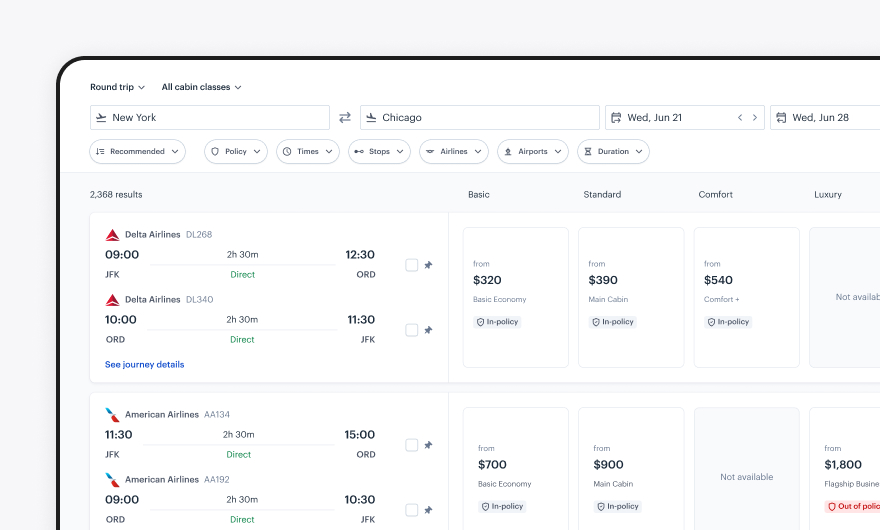
I led a critical redesign project that rescued a crucial partnership, improved our user experience, and created a unified design language across our booking platform. In the process, I also uncovered a significant revenue opportunity that substantially increased our flight booking revenue.
Delta Airlines' B2C-focused design requirements conflicted with TravelPerk's B2B user needs. The project also faced technical constraints, misaligned stakeholder expectations, and a rigid deadline.
As Product Design Lead and de facto project manager, I was responsible for establishing clear processes, aligning stakeholders, and balancing Delta's requirements with user needs.
I led all design work from concept to implementation, created a scope document with clear success criteria, conducted a heuristic review to identify improvement opportunities, and discovered an opportunity to expand revenue by extending flexible fare offerings.
We secured the Delta partnership while improving key metrics, fixed legacy UX issues, established a unified design system, and increased revenue through expanded cancellation coverage availability.
TravelPerk is a B2B tool that makes it easy for people to book and manage company travel. Flights are the most-commonly-booked type of travel.
Delta Airlines was enforcing new guidelines for how vendors should display their products. The guidelines were created for leisure travel, as a way to promote and upsell more profitable flight fares.
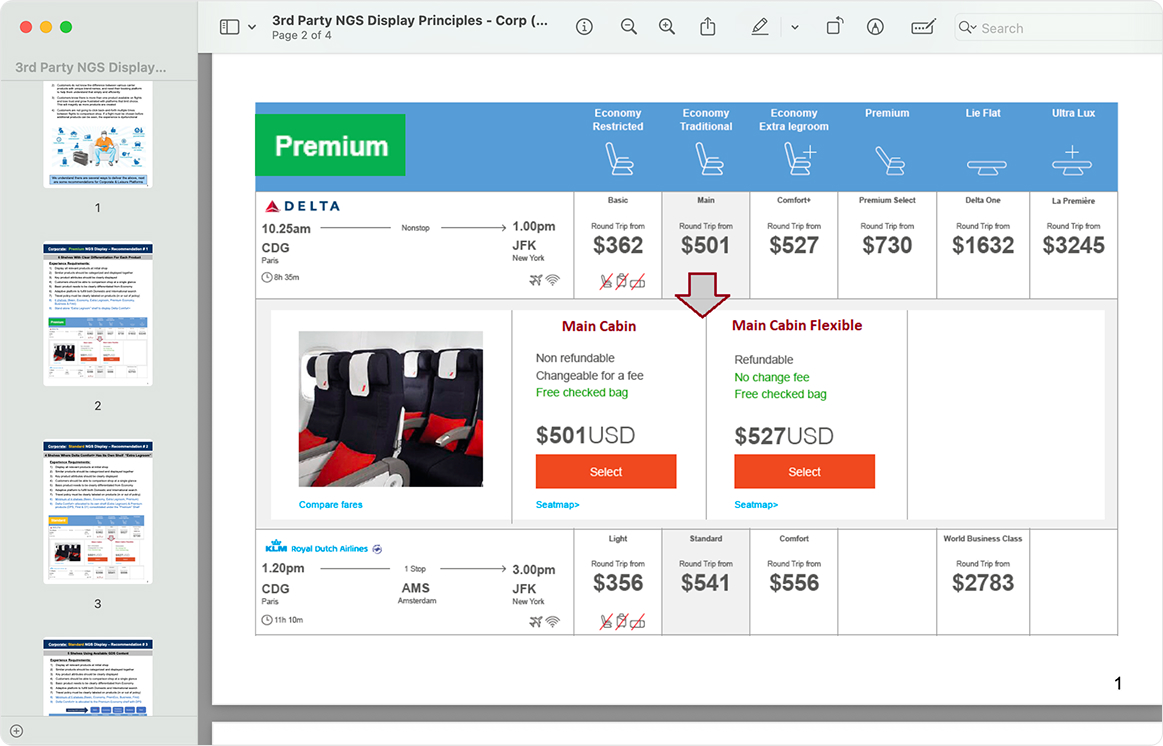
Employers actively instruct their employees to avoid upselling attempts to maintain strict policy budgets. This created a fundamental misalignment between Delta's goals and our users' goals. Not adhering to the guidelines meant risking Delta's inventory, which would have been detrimental to TravelPerk's US market presence.
With conflicting stakeholder requirements and a rigid deadline, I established clear processes and communication frameworks to align all parties and maintain project momentum.
📄Comprehensive definition of done document
✅Agreed on by stakeholders on both sides
🔄Became our key reference to prevent scope creep
🔍Weekly critiques with other designers
💻Weekly reviews with engineering
🧪Regular usability testing
🔇Avoided technical language with Delta stakeholders
⏪Moved all contentious feedback offline
📄Evaluated feedback against the DoD document
Every major decision was backed by customer data and behavioral evidence to build confidence with both internal teams and Delta stakeholders.
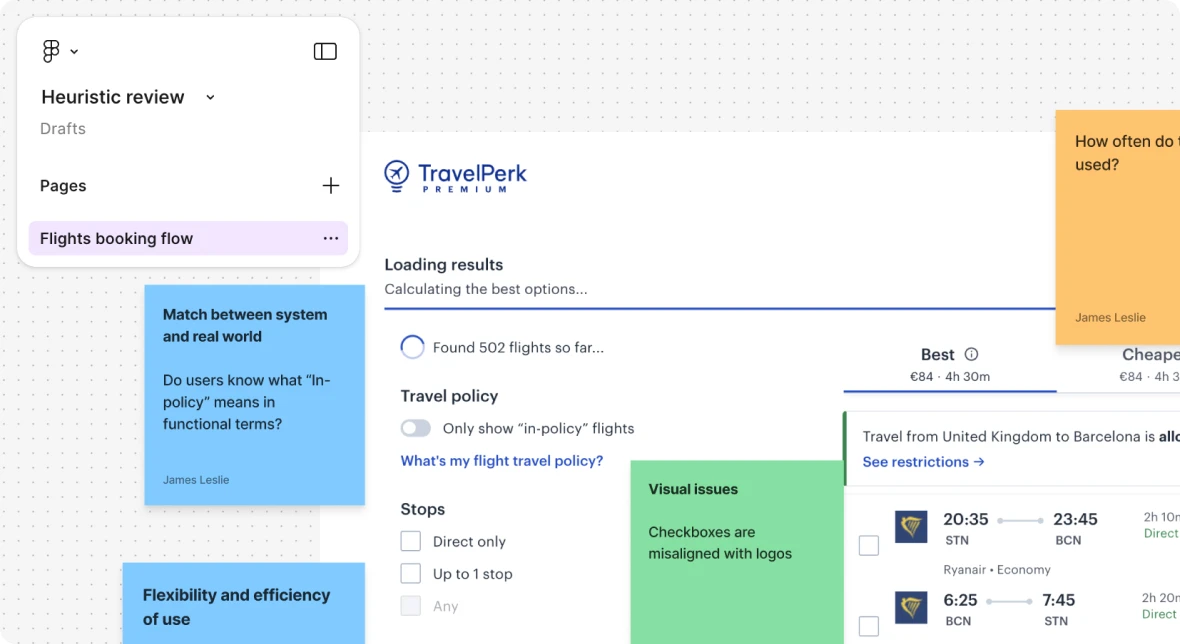
The redesign provided an opportunity to address legacy usability issues. Through a heuristic evaluation with designers from all booking verticals, we identified several improvement opportunities.
We usability tested all changes and implemented a phased rollout to monitor metrics. Observing real user sessions revealed actionable insights, and we implemented a CES widget to quantify usability.
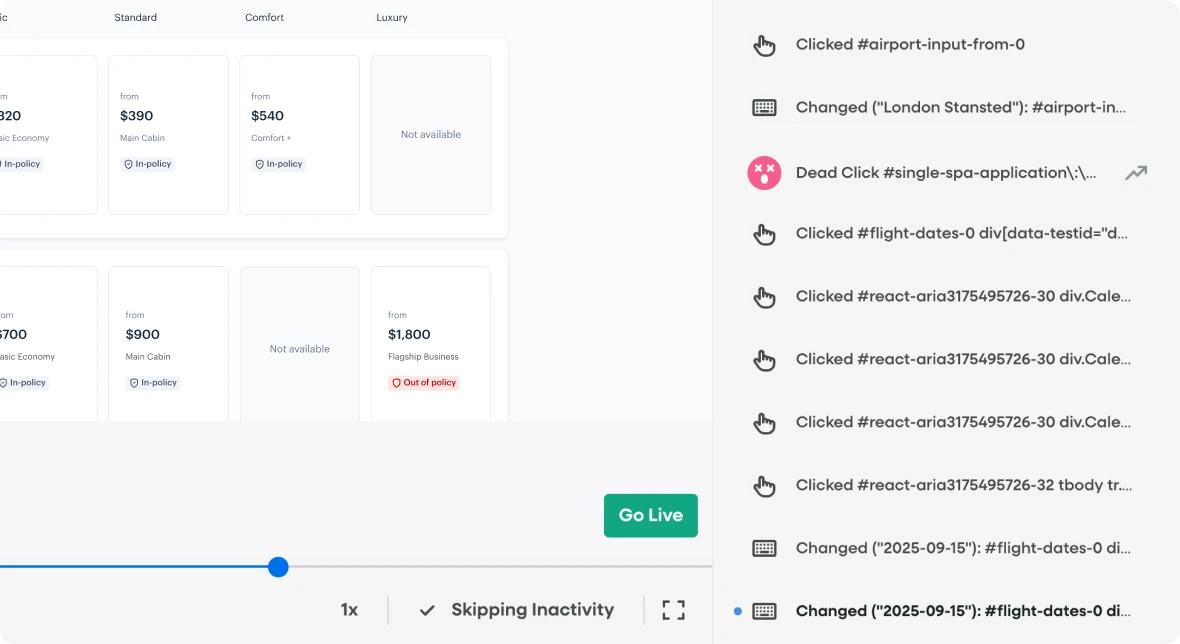
Surveying 1,000 customers revealed flight times as the consistent top priority when booking travel. This conflicted with Delta's guidelines, which proposed hiding return times until outbound selection.

Armed with research insights and stakeholder alignment, we delivered a solution that satisfied Delta's requirements while improving our user experience and unlocking new revenue.
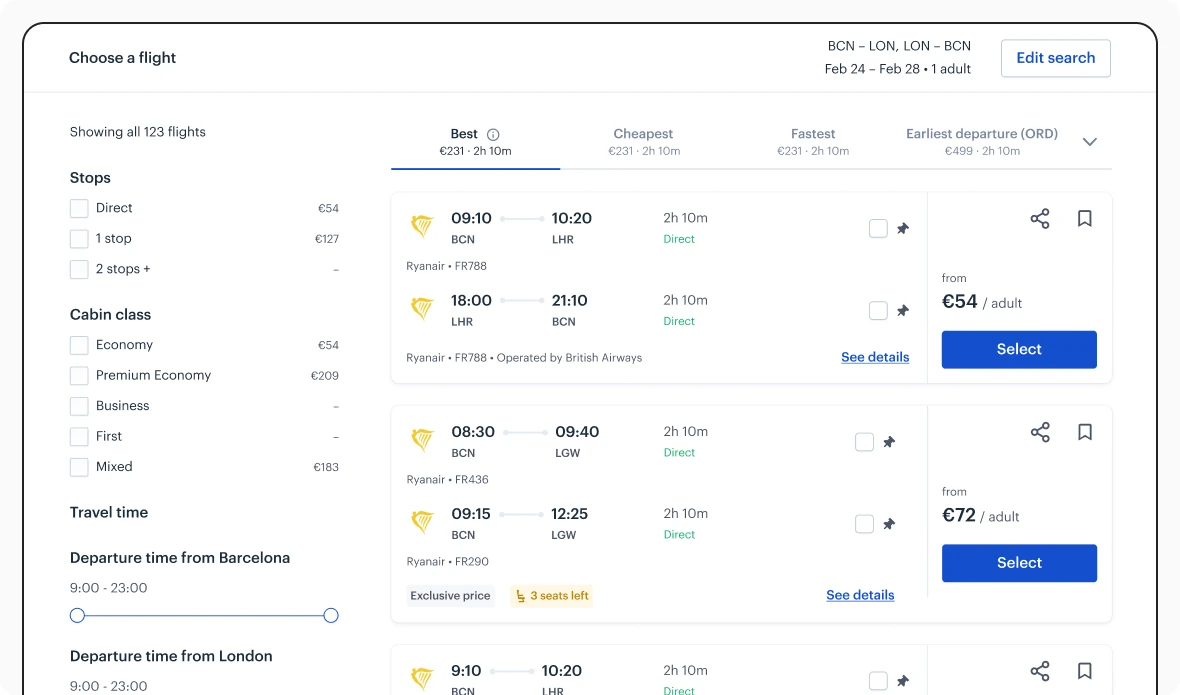
Despite Delta's rigid guidelines, I managed to negotiate some key adjustments: keeping the outbound and return flight overview, and reducing fare categories from 6 to 4. These adaptations helped to maintain consistency with TravelPerk users' mental models.

After discovering that the new design resulted in many empty results for European searches, we created separate region-specific designs: North American results follow Delta's guidelines, while other markets see a simpler design to accommodate fewer product variations.
Our heuristic evaluation revealed many overlooked areas for improvement. Redesigning the entire flow gave us the ability to apply a more-considered approach to every visual element.
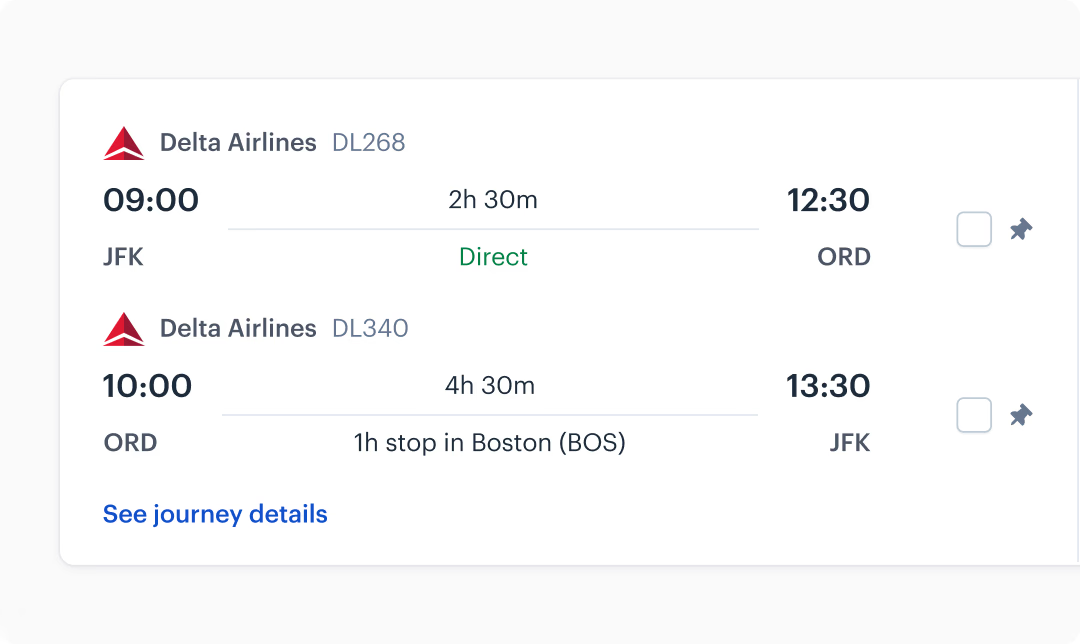
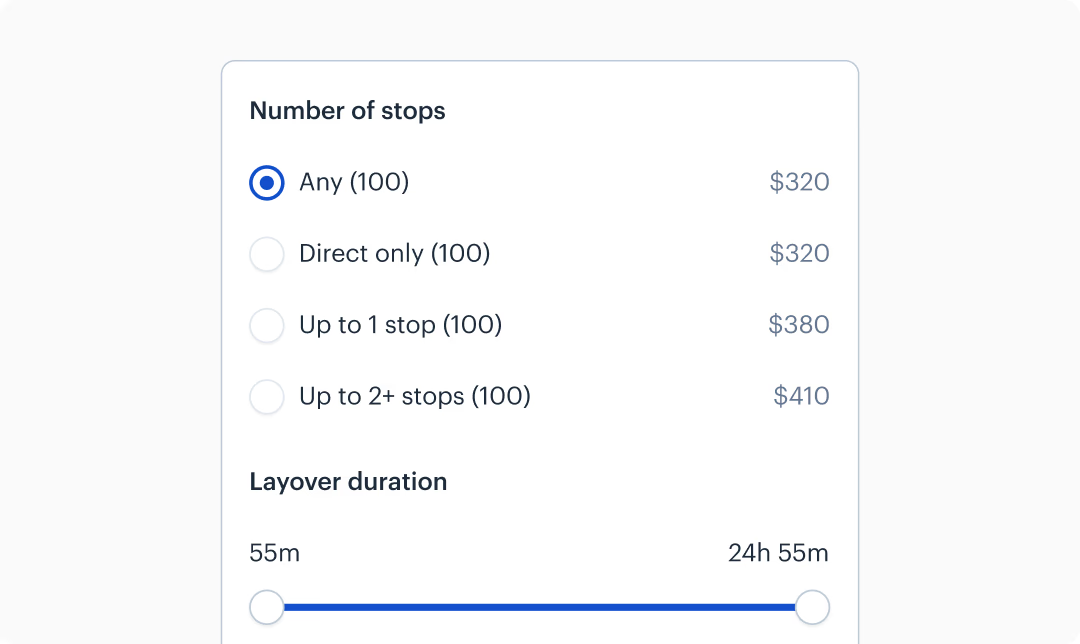
In the old design, search parameters were hidden behind a click-to-reveal interaction, despite how frequently users would adjust terms when exploring flight options.
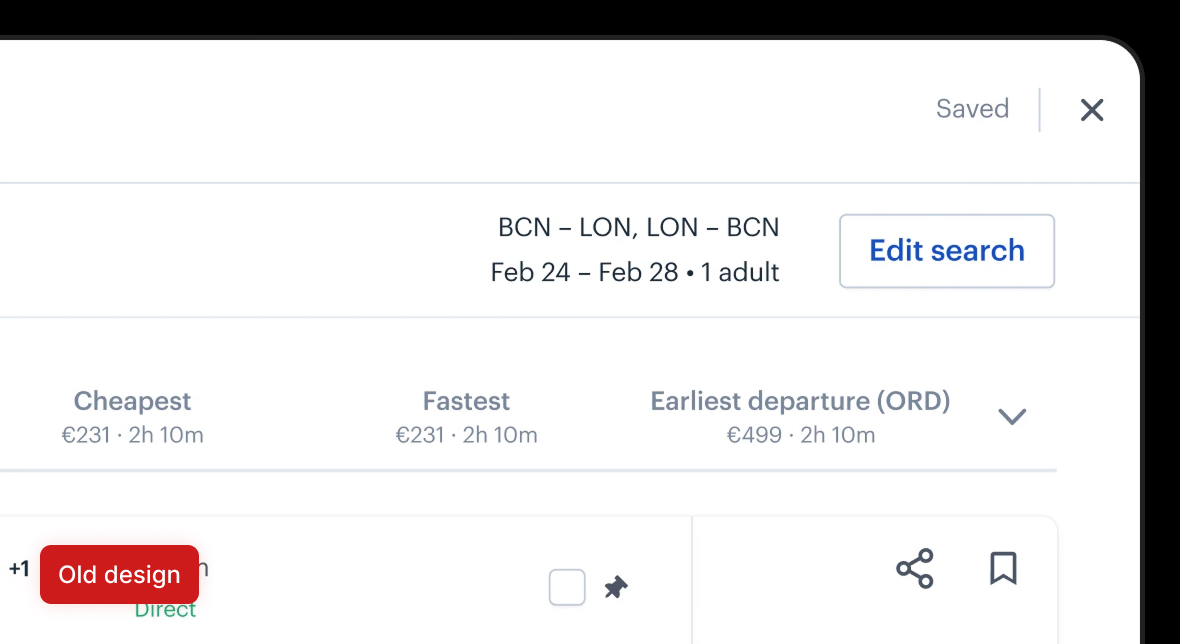
In the new design, search parameters are front-and-centre. They move out of view when scrolling down, but re-appear on scroll up, making them easy to adjust at any time. We also added date nudge buttons to explore flights on different days.
Updating the filtering experience from a side panel to a horizontal progressive disclosure pattern accommodated Delta's requirement for more horizontal space, while fixing IA and visual hierarchy issues that plagued the previous design.
We prioritised standardising the booking experience across all verticals as a core redesign goal. Each pattern was designed for cross-vertical compatibility and evaluated by all teams throughout the process.
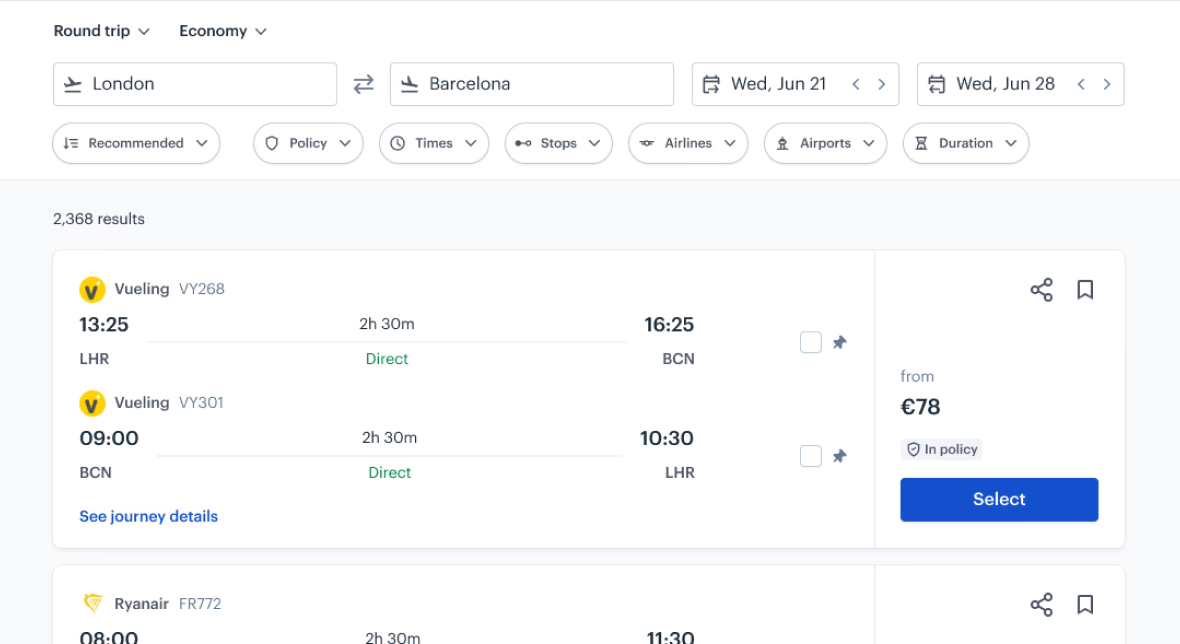
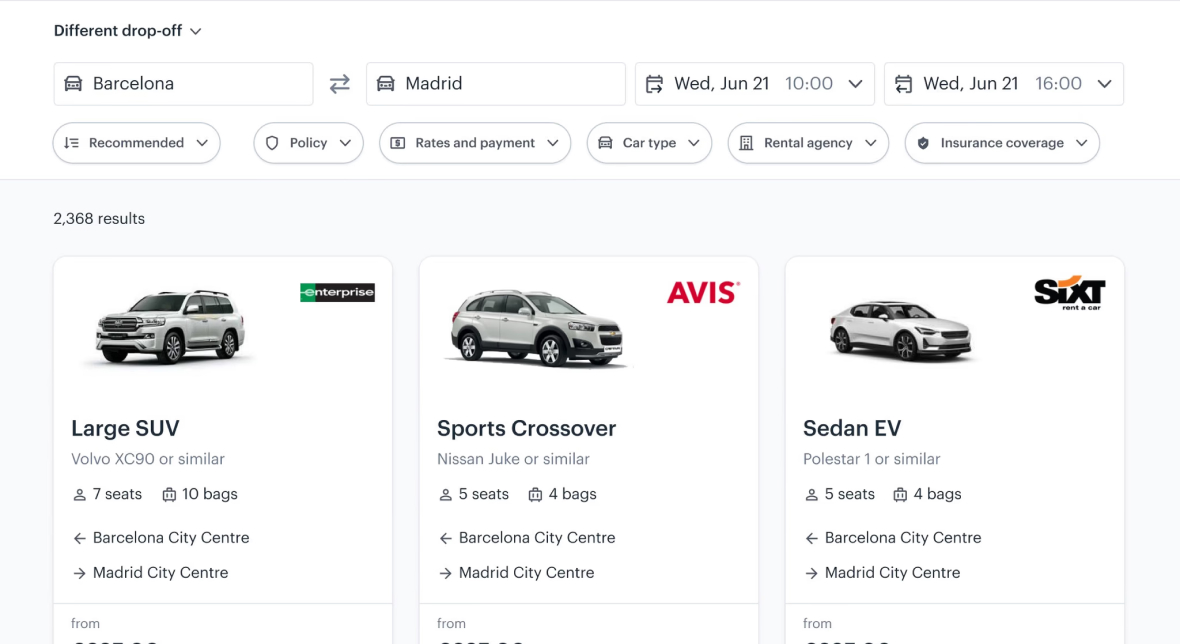

While solving Delta's requirements, we identified a significant revenue opportunity. In the previous design, all users would see the FlexiFare option as part of the booking flow. In the new single-screen layout, only users selecting 'Basic' fares would see FlexiFare—risking reduced visibility and revenue.
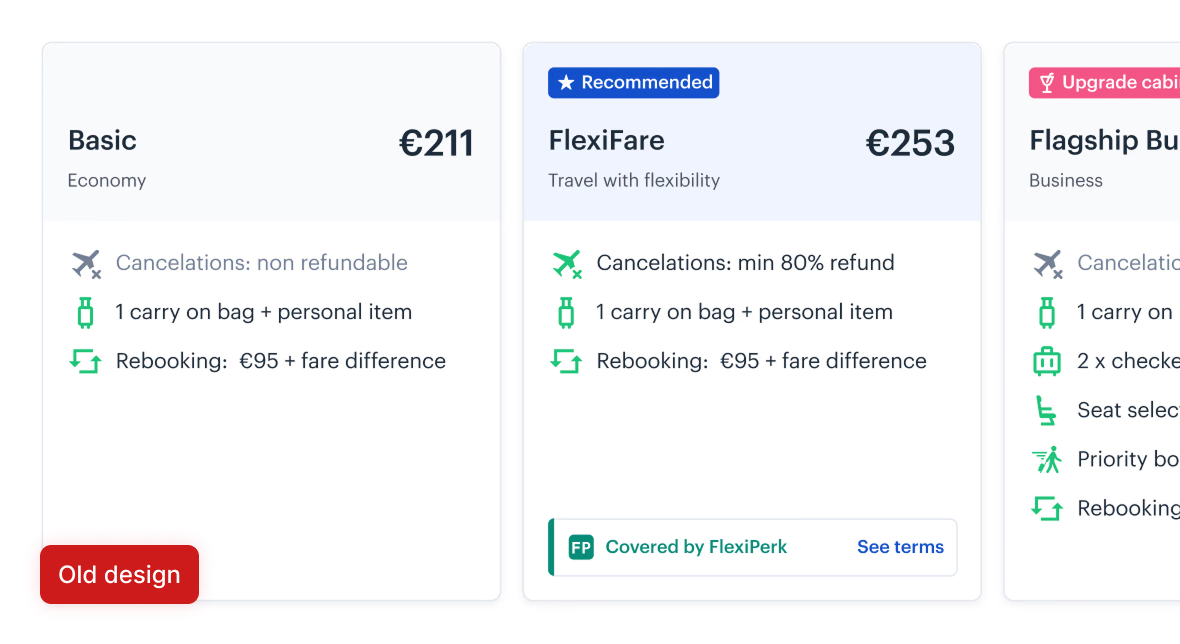
I proposed expanding FlexiFare to Basic and Standard categories, which would boost visibility and increase revenue potential due to percentage-based pricing.
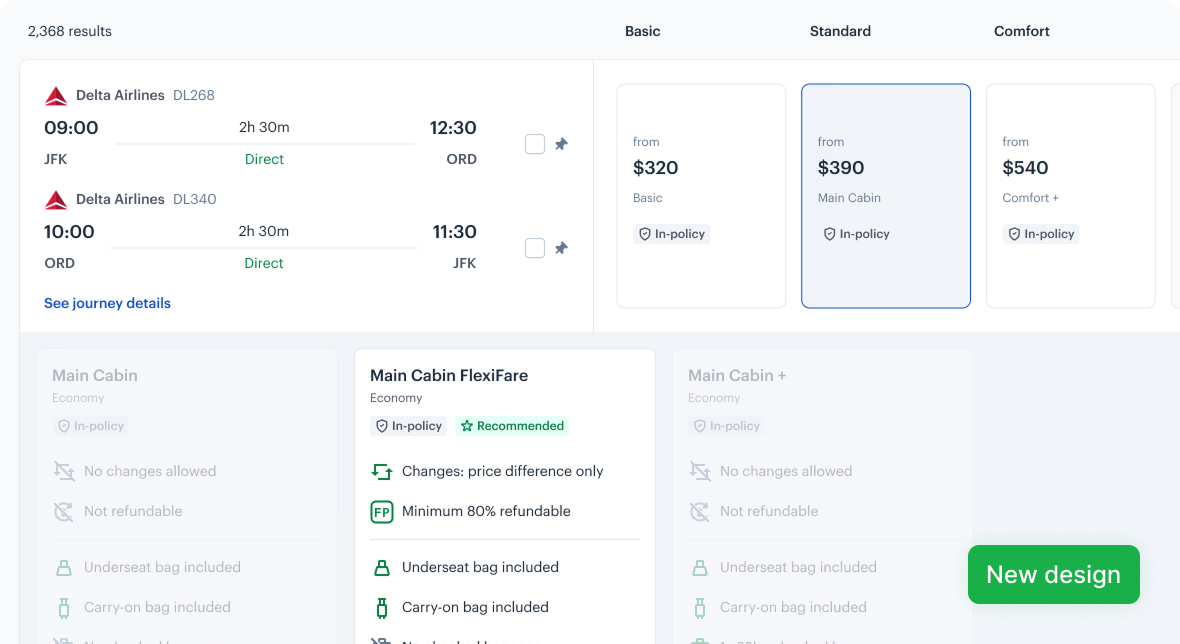
The project succeeded on multiple fronts, delivering both business and user experience improvements. The new 'standard' Flexifare variant increased attachment, representing a huge revenue increase. Most importantly, we reaffirmed our partnership with Delta while improving the user experience across all TravelPerk's booking verticals.
The definition of done document became our most-valuable tool for alignment and decision-making. By securing upfront agreement on scope and success criteria, we could resolve conflicts efficiently and maintain momentum.
Post-launch user behaviour observation revealed improvement opportunities invisible in pre-release testing. Real-world interactions provided insights that testing and quantitative data alone couldn't capture.
What began as a challenging and disruptive project ultimately became a platform for fixing cross-vertical design issues and opening new revenue streams. The constraints forced creative thinking, proving that unexpected challenges can often lead to innovative change.
If you'd like to get in touch, feel free to connect with me on LinkedIn, or send me an email at jimmyleslie.design@gmail.com